here be some homemade margarita

The weekend, as always, was awesome.

Friday

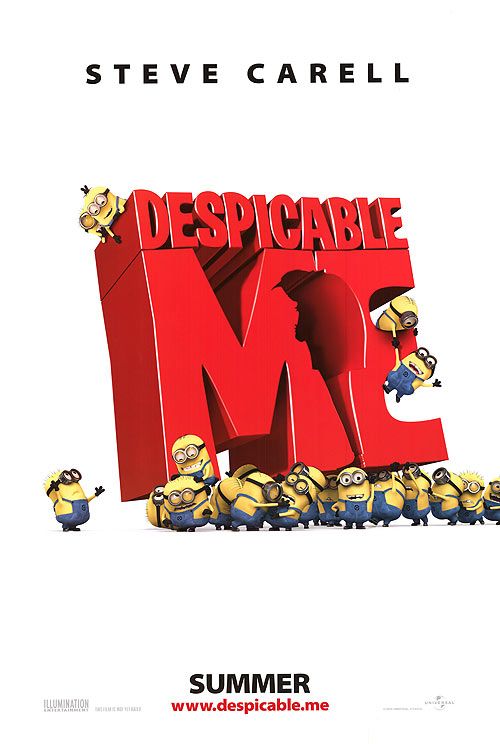
Mall date! We haven’t done this in a while, finding greater pleasure in staying indoors, watching one sitcom episode after another, and ordering takeout. But Despicable Me was already in the theaters, so we decided to go to the mall.

Requisite camwhorage before we headed out.
I went book shopping! Oh, it was heaven looking through the books even though I only ended up buying two: Jessica Zafra’s Twisted 8 1/2 and Joshua Ferris’s second book, The Unnamed. I wanted Pacific Rims, but there’s still no paperback available, and the Hunger Games books I decided to just borrow from friends to save money and space. I saw Tana French’s third book, Faithful Place, but gah STILL NO PAPERBACK, and Veronique Olmi’s Beside the Sea was nowhere to be found. Poe’s Children was out of stock, and so was The Monster of Florence. Hay.

Lunch at Five Cows, which I thought was just an ice cream bar. They serve real food (I had their chicken and fish combo), but I only took pictures of our desserts.

Jaykie’s order, Ferrero Crunch.
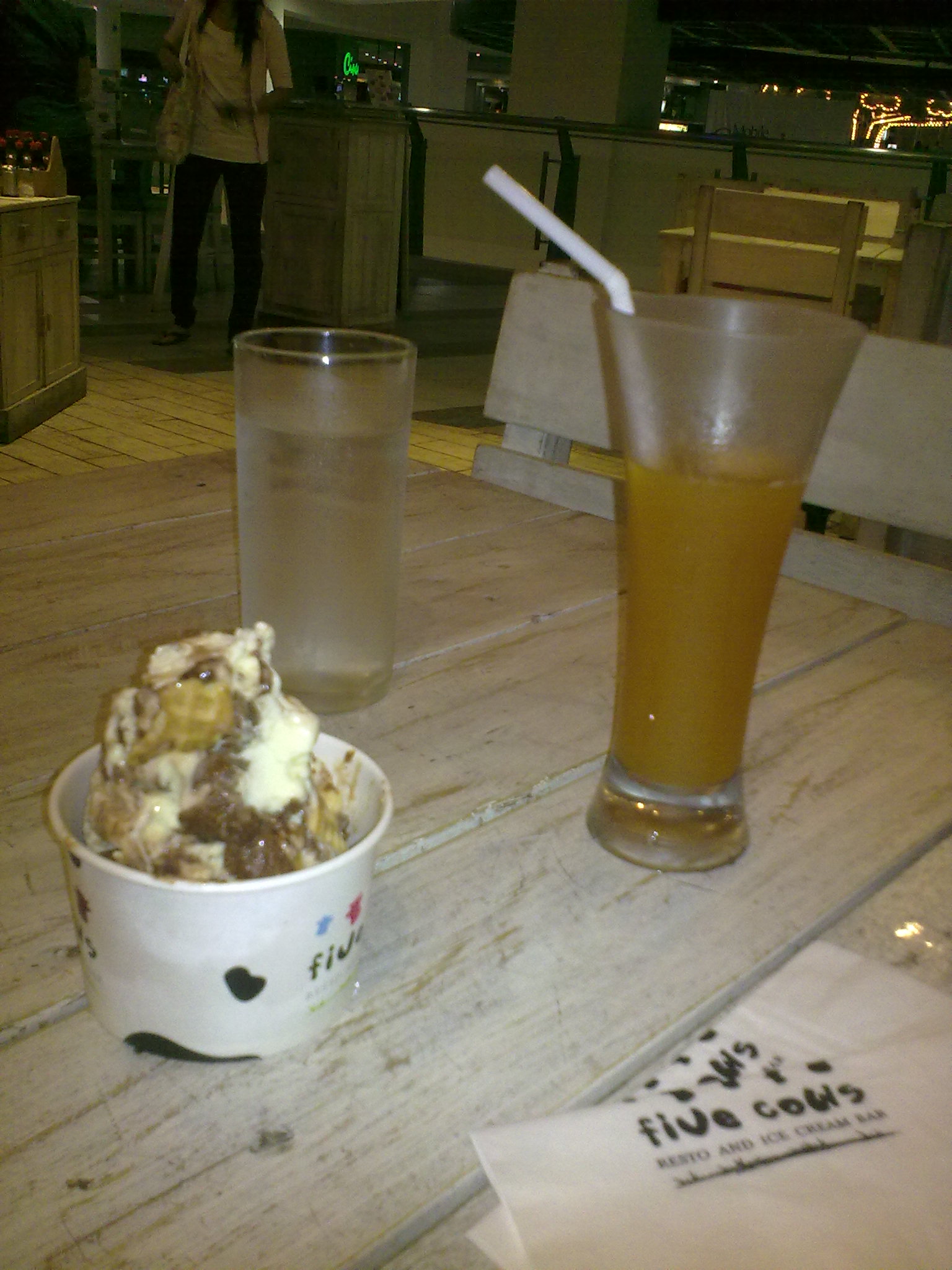
My After Eight (choco mint chip ice cream cake):

It took us several minutes to choose our desserts because there were just so many excellent choices.

Then, Despicable Me. As promised, it was full of fluffy goodness. Cute film. I want: 1) a copy of Sleepy Kittens, 2) Minions, and 3) Minions that glow in the dark. “SO FLUFFEH!”
Saturday

Having seen the lovely Nigella make margarita ice cream on TV, Jake bought tequila and decided to do his own mix right at home. (Thanks Wiki!) So after seeing the sweet and dorky Eagle vs. Shark:
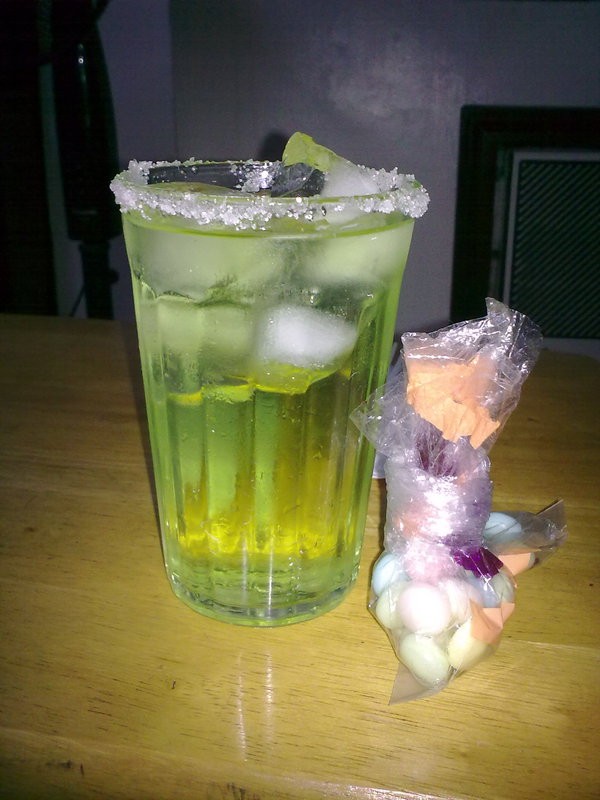
Those were mint candies from Candy Corner, btw. The margarita’s excellent! Wasak!

* * *

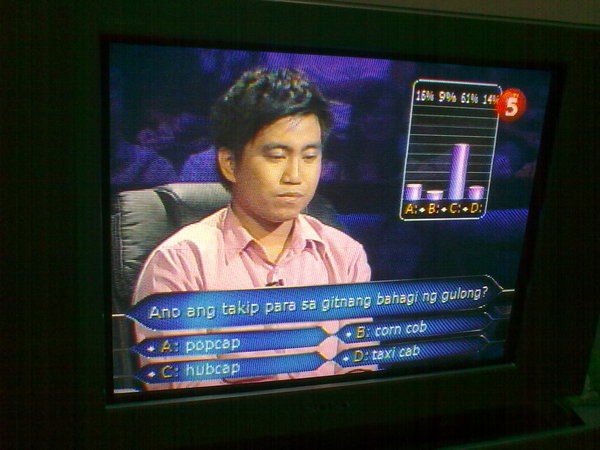
For your Moment of Zen (or, Why You Shouldn’t Trust the Audience, or, Look At These Assholes Who Answered “Corn Cob”) –
Haha! Till next week! :D

the tales of beedle the bard

I have read all seven books of the Harry Potter series and makes it a point to watch every film installment (even though they mostly disappoint me). I enjoyed this series, and became a fan with close friends and my sister. (Alas, my brothers can’t be bothered to read anything.) However, when The Tales of Beedle the Bard came out I decided not to join the madness. It’s been years since I last read a Potter story, and I thought this new collection would bore me and would not contain a hint of that magic that attracted me to Hogwarts and all that jazz as a young reader.

But. I was wrong. The stories in this book are in fact well-written and engaging. I recommend it. :)

Also, Ms Rowling, you draw? Good for you.

the society of others

I initially thought the ending was underwhelming given that amazing build-up, but upon reflection I thought – how else could it have ended? This novel is written by dramatist William Nicholson, who also co-wrote the script for Gladiator. You could clearly see the talent in the language. The plot is comparable to The Catcher in the Rye, only our Holden Caulfield in this story chooses to remain nameless, and experiences danger so real and so disconnected from his life that it has the power to either scar him permanently, or change his worldview for the better. Our world-weary protagonist is a young man living in England who would rather lock himself in his room than deal with the hypocrisies of society:

“My friend Mac is going to be an aid worker in Nepal. This is hilarious because all the aid they need in Nepal is getting out from under all the people like Mac who’ve gone there to find meaning in their lives. They’ve sucked all the available meaning up and now there’s none left for the Nepalese, who have nothing to do except carry explorers’ bags up mountains and sell them drugs. Mac says he doesn’t care, at least he’ll see the mountains. I tell him the thing about a mountain is when you’re on it you don’t see it. You need to be far away to see a mountain. Like at home, looking at a postcard. Mac says you stand on one mountain and look at the next mountain. I say, Then what? Mac says, You’re a real wanker, you know that? Yes, Mac, I’m a real wanker. The genuine article. A simple pleasure that does no harm to man or beast. Be grateful.”

”It’s like fish. Fish swim about all day finding food to give them energy to swim about all day. It makes me laugh. These people who hurry about all day making money to sell each other things. Anyone with eyes to see could tell them their lives are meaningless and they aren’t getting any happier.”

He is angry, but I also sensed a deep-seated unhappiness, a disillusionment: “When I was small I thought the world was like my parents, only bigger. I thought it watched me and clapped when I danced. This is not so. The world is not watching and will never clap.” Well, then. His father introduces an addition to the family: a baby with a younger woman. This is the straw that breaks the camel’s back. Next thing we know our young protagonist is hitchhiking in an unnamed European city, and ends up in the midst of dystopia. The driver of the vehicle he rides in breaks through a checkpoint, and he runs away. From where he hides, he sees the man being tortured. Later he learns that the contraband material the driver is sneaking through the border isn’t drugs, or porn, but books. Why?

From here on the novel reads like a thriller. Every now and then the protagonist finds himself debating with other characters about philosophy, and ideology, and faith, and poetry, but the action moves forward. Forward and fast. The narrative has a dreamlike quality that I love.

Read an excerpt.

state of reading address

I read a few more pages of Don DeLillo’s Falling Man (I began reading it before I dove into Clash of Kings) before completely giving up. Come on, man, I gave you a chance. The emotion is there. The book is about the aftermath of 9/11, after the towers fell, so it is impossible to write a book with no horror, no misery. But no matter how raw the sadness, DeLillo’s writing style just couldn’t hold my attention. I didn’t find the pages engaging at all. It would have been my first DeLillo book. Le sigh.

Thank goodness I bought this copy for less than 90 pesos. Anyone wants it?

Right now I’m reading William Nicholson’s The Society of Others. I don’t know if it’s any good. I hope it is. On the side I’ll be reading Volume 2 of The Swamp Thing and the Philippine Speculative Fiction V anthology. I aim to finish PSF V soon so I can review it along with PSF IV.

I am seeing the end of my TBR pile. And I thought this day would never come. Next steps would be:

1) borrow the next two books in Martin’s epic saga and anything beyond Genshiken Volume 5 (which I just finished);

2) read LOTR. I have Jaykie’s volume sitting on my bed, but! D: It is HUGE AND SCARY; and

3) book shop! :D Or borrow more, haha. To save money and space, yes.

all over but the shoutin’

Some people’s memoirs you just don’t want to read, but if I ever get to meet Rick Bragg I will thank him forever. How generous of him to share these stories. A journalist by profession, Bragg talks about the death of strangers: those that get shot standing behind counters in New York City, the peeled faces of Haitians, the riots in Miami. The bombing of a daycare center in Oklahoma City, the Susan Smith case regarding a mother that drowned her own children. About his personal life, Bragg bares all: his life of squalor and pain in Alabama, his mother’s back-breaking work, his absent father’s death, the many girls he has had in his life due to his inability to commit, his days in Harvard as a Nieman fellow in 1992, his rise to fame in 1996 when he won the Pulitzer Prize for feature writing while working for the New York Times, and his belief, in his heart of hearts, that he is like his father – cold and mean, and ultimately lonely. I marvel both at his honesty and his way with words. This is one of my favorite moments (and one that got me teary-eyed).

I thanked him and made to leave, but he stopped me with a hand on my arm and said wait, that ain’t all, that he had some other things for me. He motioned to three big cardboard egg cartons stacked against one wall.

Inside was the only treasure I truly have ever known.

I had grown up in a house in which there were only two books, the King James Bible and the spring seed catalog. But here, in these boxes, were dozens of hardback copies of everything from Mark Twain to Sir Arthur Conan Doyle. There was a water-damaged Faulkner, and the nearly complete set of Edgar Rice Burroughs’s Tarzan. There was poetry and trash, Zane Grey’s Riders of the Purple Sage, and a paperback with two naked women on the cover. There was a tiny, old copy of Arabian Nights, threadbare Hardy Boys, and one Hemingway. He had bought most of them at a yard sale, by the box or pound, and some at a flea market. He did not even know what he was giving me, did not recognize most of the writers. “Your momma said you still liked to read,” he said.

There was Shakespeare. My father did not know who he was, exactly, but he had heard the name. He wanted them because they were pretty, because they were wrapped in fake leather, because they looked like rich folks’ books. I do not love Shakespeare, but I still have those books. I would not trade them for a gold monkey.

copyright© 1997 by Rick Bragg

Source.

video: stories

Indian writer  Meera Nair writes with such emotional and descriptive precision that her fiction are surefooted, affecting, immersive, transportive. She writes with fluid prose, but I was more impressed with her collection’s wide range of characters: the husband who yearns for a blow-job (his first!), the poor delivery boy enchanted with a customer, the teenager watching as his grandfather loses his land to the Communists, three advertising professionals on a tense vacation in a town developed by the British, a female journalist and her sick father now withering away, an editor and his wife living with both their mothers, the town folks ecstatic over the reported arrival of the President of the United States. So many worlds here. My favorite stories: “Video”, “Sixteen Days in Summer”, “My Grandfather Dreams of Fences”, “A Certain Sense of Place”, and “Vishnukumar’s Valentine’s Day”.

the river king

I am fond of stories set in small towns, especially small towns created from scratch. The small town of Haddan, despite its “blustery” weather, is as picturesque as any town can be, filled with fields of wild irises, swans, and the scent of roses. Every year, however, a horde of rich boys and girls travel to the Haddan School, an exclusive academic institution that the very locals, who lead simple lives, cannot even afford to attend. One of the on-campus boarding houses is called Chalk House, built so close to the river that its residents wake up to damp beds and walls. The Chalk House boys observe a strict hierarchy; any boy who wishes to live in peace has to go through an initiation.

One morning, one of the Chalk House boys is found dead.

But Alice Hoffman’s novel isn’t just a murder mystery. It is a story of teenagers rewriting their backgrounds, of a town with a history of a suicide, of people with secrets. Inside is a trick on how to turn a white rose red.  (Remember that scene in Tim Burton’s Alice in Wonderland, when the young girl passes by clumps of white roses and asks, Do you know how to turn white roses red? It isn’t magic. It is mentioned in Hoffman’s book that during Victorian times, aristocrats liked to keep white roses in their gardens in order to amuse each other with this trick. It is not magic, just a clever use of chemistry. But it’s magic when you don’t know the secret.)