the end

r264621_1105042

Just finished it this morning. Bought a copy along with this book, after what felt like months of hunting down this novel in several bookstores. (I remember standing in a Fully Booked branch somewhere, sometime before Christmas, spelling out the author’s last name. No luck then.) Finally found it in Bibliarch near where I work.

I loved it. How else to review the damn novel? Mostlyfiction.com posted an excerpt, and so did NPR.

Consider the first two paragraphs:

You Don’t Know
What’s in My Heart

WE WERE FRACTIOUS AND overpaid. Our mornings lacked promise. At least those of us who smoked had something to look forward to at ten-fifteen. Most of us liked most everyone, a few of us hated specific individuals, one or two people loved everyone and everything. Those who loved everyone were unanimously reviled. We loved free bagels in the morning. They happened all too infrequently. Our benefits were astonishing in comprehensiveness and quality of care. Sometimes we questioned whether they were worth it. We thought moving to India might be better, or going back to nursing school. Doing something with the handicapped or working with our hands. No one ever acted on these impulses, despite their daily, sometimes hourly contractions. Instead we met in conference rooms to discuss the issues of the day.

Ordinarily jobs came in and we completed them in a timely and professional manner. Sometimes fuckups did occur. Printing errors, transposed numbers.Our business was advertising and details were important. If the third number after the second hyphen in a client’s toll-free number was a six instead of an eight, and if it went to print like that, and showed up in Time magazine, no one reading the ad could call now and order today. No matter they could go to the website, we still had to eat the price of the ad. Is this boring you yet? It bored us every day.Our boredom was ongoing, a collective boredom, and it would never die because we would never die.

Will you look at that.

I have no choice but to forever wonder how I would have reacted to this story if I had read it when I was still in college, when all I knew of office life I got from episodes of The Office.

Joshua Ferris writes so beautifully, and so damn accurately that he breaks my heart.

Read this book.

heart-shaped box

heart-shaped-box

I’m suspicious of any book/film with a song title for a title, so this Joe Hill novel I’ve been seeing on the shelves for a long time but I don’t pick it up or buy it because the title’s – *cringe*. And I love that Nirvana song.

Not to mention that the tag line used an ellipsis instead of a period. What is with horror/suspense novels and their damn ellipses?

Anyway, I haven’t read a good horror novel in a while (I’ve bought Joe Hill’s dad’s It, and a Clive Barker novel, but I’ll get to them later, they’re enormous), and I’m so glad I’ve read this one. Neil Gaiman, according to one of the blurbs, loved it “unreservedly”. Well, I wouldn’t go that far, but Hill’s narrative has this restraint and touches of humor (not hysterical like his father’s; sometimes Stephen King practically screams the joke at you) that I fell for. It’s good. Still got the usual horror fare, like Ouija boards and ghosts talking through radios, and heroic animals, but it’s smart enough to know when it’s being faced by something silly. It’s good.

In the same bookstore where I got my copy of this, I also found an Owen King short story collection. Owen veered away from the supernatural, unlike his brother who embraced it and his dad who, well, practically lived in it. Wonder if he’s good. Maybe I’ll check it out when I have money again.

the year after

400000000000000049794_s4

This book was published late 2005; I was able to read it only this year. People always talk about brutal honesty – this book is brutal, searing, frightening, almost painful to read. In one article I read, Sylvia Plath’s daughter, Frieda, said she’s ashamed of her “very, very strong” need for a mother, evident in her poetry. It does open a weakness, Frieda said. In The Year of Magical Thinking, Didion does not only admit to this “weakness” (her very, very strong need for her husband, her daughter, normalcy) – she dissects it, connects it to existing literature, questions it, rejects it, accepts it.

Read an excerpt here.

‘either I’m nobody, or I’m a nation’

waoFinished reading the novel over the weekend. Entered the book blind, only knew it has won the Pulitzer and that Jake’s been dogging me months ago to buy it but I didn’t because I couldn’t afford the hardcover. Thought “Oscar Wao” is a child and the novel’s a coming-of-age story. I suppose it is. But it’s more. Much, much, much more. I would like to summarize the novel and give at least a coherent book review but I know I’ll just end up sounding like the blurbs (“…deliciously casual and vibrant…” “[a] kick-ass [and truly, that is just the word for it] work of modern fiction” “…at times expertly stunning us with heart-stabbing sentences…” “a splendid portrait of ordinary folks set against the extraordinarily cruel history of the Dominican Republic in the twentieth century”).
What else can I offer? It reads like A Hundred Years of Solitude (family tree, curse, magical realism) as narrated by Kanye West. Or possibly Chris Rock doing stand-up. (“Players: never never never fuck with a bitch named Awilda. Because when she awildas out on your ass you’ll know pain for real.”) Just consider the way he describes their horrible dictator Trujillo: a personaje so outlandish, so perverse, so dreadful that not even a sci-fi writer could have made his ass up. Just consider the way he describes Trujillo’s assassination: the escopeta wielded by Antonio de la Maza…goes boo-ya!

Man, I’d like to see those words used in a history book. Boo-ya. And ass. Heh.

So you don’t know Trujillo. Yeah, me too (I checked the encyclopedia – yes, I did, Volume D, “Dominican Republic” – but the article just skirted over the details of his dictatorship). And the narrator knows about your non-knowledge too, beginning his Trujillo crash-course with: For those of you who missed your mandatory two seconds of Dominican history. Perhaps with bitterness. Perhaps with resignation.

It’s about Trujillo, it’s about Oscar and his family, it’s about a raped country, it’s about diaspora, it’s about hating where you came from and not particularly liking where you ended up in, and yet dealing with it, just dealing with it, and how hard that is. This line just killed me: Ten million Trujillos is all we are.

Everybody should read this goddamn book.

Note: Title of entry from one of the novel’s two epigraphs (The Schooner “Flight” by Derek Walcott). The other epigraph came from Fantastic Four. Now figure that one out. :)

Photo credit: Redpen

‘surreal suburbia’

imagedbcgi The American suburbia has always been much maligned. Think Rick Moody’s The Ice Storm, think The Stepford Wives, think Desperate Housewives. In suburbia, everything is perfect, and everyone is lonely – because of, despite of.

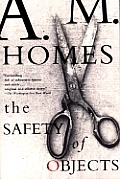
A.M. Homes’ short story collection The Safety of Objects, first published in 1990, uncovers the bizarre in places where everything is supposed to follow the rules. In “Looking for Johnny”, a man, possibly crazed, kidnaps a young boy and later on tells him that he is not the right kid, he is bringing him back. The boy, who has been begging to be taken home, suddenly realizes the weight of this judgment and apologizes, asking his kidnapper: “What is wrong with me?”

At the beginning of “Esther in the Night”, a mother imagines a burglar breaking into her family’s home, imagines him rounding them up and noticing the “room there with the light on”. The mother imagines herself saying there is no one there, but the burglar will be persistent, and she’ll have to open the door and show him her son lying on the bed, hooked on tubes, dead but not dead. She imagines the burglar seeing this, and running away from their house, not wanting to take anything anymore.

In “Adults Alone”, Elaine is joyous after dropping off her two sons at her mother-in-law’s, but later on thinks, “Without the children, with nothing absolutely required of her, she is exhausted. She is more tired than she ever remembers being.”

I’ve never read a collection quite like it.

(The title of this entry is taken from the back cover of the 2001 paperback edition. The entire sentence reads: “Working in Kodacolor hues, Homes offers an uncanny picture of a surreal suburbia – outrageous and utterly believable.”)

Photo credit: Powells.com

dinner dinner

I got my much needed pick-me-up on Friday (this week had just been exhausting for me, I don’t know why), when I went out to have dinner with my high school girlfriends (and one of the girls’ boyfriends). We went to Avenetto at its MOA branch. (We almost switched to Sbarro when we couldn’t be seated right away, but we got tired of walking.)

avenetto83

I’ve never tried that restaurant before, didn’t know they had such big servings. (Good, too, that I was warned by Sasa and Grace Anne. I mean, what if I ordered a pasta dish all by myself?)

Then Haagen-Dazs for dessert. Sasa ordered Seventh-Heaven-something-or-other; the dry ice in the middle was supposed to represent Heaven. I thought it was a nice touch. (I still don’t understand why the ice cream has to be so expensive, though. I mean – it’s ice cream!)

haagen-crop

I was able to get extra whipped cream and a cinema pass, thanks to Sasa’s power authority beauty employee discount bullying skills.

More photos at my Multiply site. All photos credited to Sasa and RJ. Thanks, guys!

(By the way, these girls and I are planning a trip to Bohol early next year. We’re going to stay in Cebu for a short while – do you know of a nice cheap nice place where we can stay? :) E-mail me or leave a comment.)

* * *

The next day, Saturday, I met up with ex-office mate Eden at Trinoma. (In July last year I had a month-long stint as web copywriter. I took the job because two months of post-college joblessness just felt too long and I was getting anxious and paranoid and impatient and angry with myself for not getting a job sooner. I left because there was too much work and the pay wasn’t really good.) Eden talked like she just downed five cups of coffee. While we were inside Powerbooks she gushed over Atonement, and ripped Stephenie Meyer, Paulo Coelho, and Nicholas Sparks – in that order. I participated in the exercise (Meyer’s okay, not blow-me-away good; Coelho I believe may just be a victim of bad translation, to which Eden replied, “E bakit si Gabriel Garcia-Marquez? Ano yun, magaling lang translator niya?” Well, good point. As for Sparks – hm, no), then got a little frightened halfway through. Meyer fans can be really brutal.

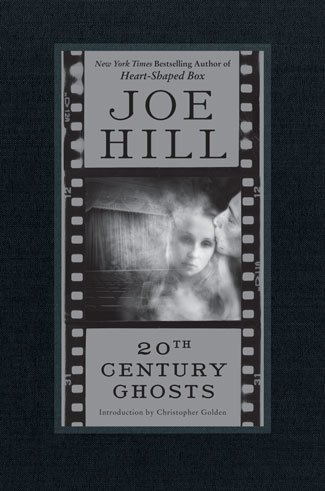
We left the bookstore without buying anything. (I wanted to buy a copy of 20th Century Ghosts, but it was sold out.)

The last time Eden and I met, I practically forced her to watch Jesse James. So this time she practically forced me to watch Quantum of Solace. I wasn’t even able to watch Casino Royale. Come to think of it, Quantum might have been the first Bond film I was able to watch in entirety. It was all right; I had fun.

I just adored the song (Jack White! Jack White!) in the opening credits:

Mary Grace (another restaurant I’ve never tried before): Food for the Gods, Mango Bene. Terrific.

Before we went home, she bought me a book (A.M. Homes’ The Safety of Objects) as a late birthday gift.

Or maybe because I just kept dogging her to do so.

Hm. I should do that more often. :)

what’s in a name

I just saw a review of Joe Hill’s 20th Century Ghosts in the paper. I think I’d go scour the bookstores for a copy of this. I haven’t read a good horror story in months.

The review said the collection “has been out of print until fairly recently”. Made me think it was one of those classics.

Then it turned out Joe Hill was born Joe Hill King. He is Stephen King’s son.

Holy shit.

I didn’t know that. An article from the New York Times mentioned that King dedicated his novel, The Shining, to “Joe Hill King, who shines on.” I’ve read that novel maybe two years ago. I think I even remember seeing that dedication page. Sweet. Now that little kid’s a published author.

The last time I’ve been this shocked was when I read an article by Dave Barry, talking about how his son was doing in college. You see, I have a copy of Dave Barry’s Greatest Hits, a compilation of his columns in the 80s, or thereabouts, so when I read that much recent article I actually went, “Ay! College na pala siya!”

Ang tita na lang ng comment. :) But it seemed like yesterday – well, come to think of it, literally yesterday – I was just reading about Dave Barry’s son landing a role in the school play, and now he’s all grown up and lecturing his father about physics!

Anyway. From the NYT article:

When [Joe Hill] was about 12, The Bangor Daily News accepted an essay he submitted. “I was completely pumped,” he told me. “I felt like I was on the verge of major celebrity, and my excitement about the piece lasted right up until the day it was published. When I read it in the newspaper, I realized for the first time that it was full of trite ideas and windy writing. At the end, they had added a little postscript that said, ‘Joseph King is the son of best-selling novelist Stephen King,’ and when I read that I knew that was the only reason they published the piece. You know, at that age the fear of humiliation is probably worse than the fear of death, and not long afterward I started to think I should just write under a different name.”

When I asked Hill what it was like growing up in the King household, he quoted an old Jay Leno joke, which went, he said, something like this: Stephen King asks his kids, “Hey kids, you want to hear a bedtime story?” And the kids scream, “Noooooo.”

“But it wasn’t like that,” Hill explained. “My dad is a great storyteller, and we loved to have stuff read to us. As a family, my mom and my dad would sit down and the book would go around the circle — we’d sit and read all together. It sounds very 19th century, but it’s true.

And:

Hill writes in two traditions that he would argue are artificially walled off from each other: genre fiction, with its emphasis on breakneck, often outrageous, plot and metaphor; and literary realism, which values detailed characterization, psychological depth and subtle epiphanies.

I just love how the author defined the traditions. Sounded accurate. :)

Photo from Joe Hill’s official website.