the lovely bones

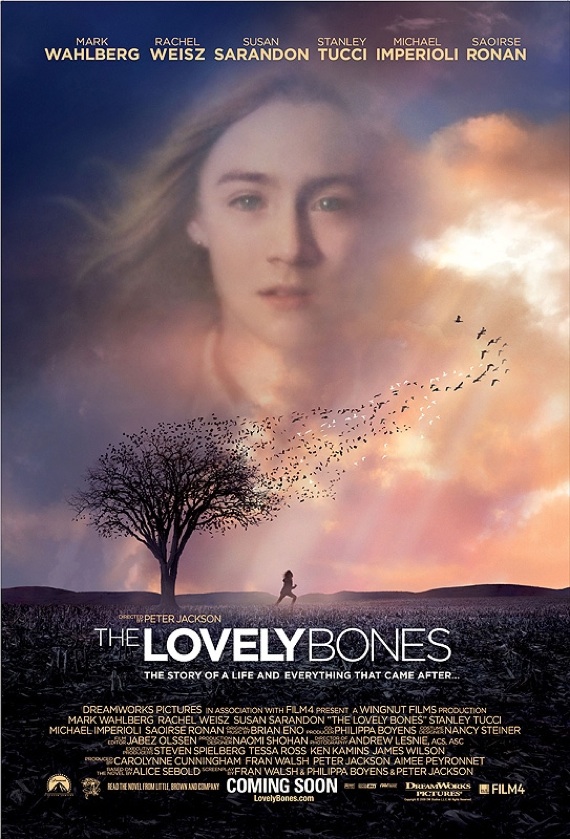
I feel bad for Peter Jackson. His film was generally panned by critics after its release, but I’m sure beneath the overwrought CGI effects, the slightly annoying narration, and the errors in characterization lies a beautiful film. If only it were edited more thoroughly, or if it were written better. I read the book years ago and I don’t remember ever cringing when Susie Salmon begins yearning for a kiss from her crush in the afterlife. Really: you get brutally raped and murdered at the age of 14, and you can only think of a kiss? Really. Maybe Alice Sebold’s engaged writing just made this fervent wish believable, and human. In the film, Susie just appears stupid and shallow.

I wouldn’t say this was a bad film. I did finish it, all two hours of it, and there were scenes that I genuinely loved. I loved the cinematography. The musical score. And there’s good acting all around. The pace felt slow at first, even lazy, but I got the hang of it easily enough.(I just really hated that part where Ray and Susie talk by the lockers, and almost kiss – that was too fast, Mr. Jackson. Remember build-up? It’s a good thing. And between Susie and Ray, I didn’t feel the chemistry at all.)

The fact is: no matter how many the errors, this film will still be heartbreaking due to its subject matter.

But yes, this could have been a much, much better film.

one for pedestal magazine

I am happy and proud to share that Arlene Ang, Pedestal Magazine‘s poetry editor, sent me an e-mail saying that the magazine would like to use my poem, “Maps”, in an upcoming issue. This news made me so happy because I’m a fan of both Ms Ang and Pedestal Magazine. Watch this space. :)

(Also: I realize that I don’t have a “writerly” picture. You know, chair, or window, or desk, black and white, shadows, somber expression on the face, as though I carry the world on my shoulders. I’ll probably end up sending them a photo where I’m smiling so wide they can see all my teeth, haha.)

pinoydon, etc

Friday was Jaykie’s grown-up duties day – pick up his paycheck, deposit his savings, pick up his credit card, etc. But before all that we had lunch at Pinoydon at The Podium. It’s a Filipino-Japanese fusion place. I can’t remember the exact name of the dishes we ordered, but I know I had chicken and Jake had beef.

We also ordered some aligue (crab fat) maki. We originally wanted the tuna maki crunch with aligue, but it wasn’t available.

Really yummy. Pinoydon also has interesting desserts.

We had the Banana-Q Split.

Ice cream, whipped cream, pinipig, bananacue. Win!

On Saturday we ordered Pizza Hut’s Chili Beef Hotdog. I haven’t had this pizza before, but after having it for dinner (and today’s breakfast) it’s fast becoming my favorite. While stuffing our faces we watched 30 Rock (“They edited Will and Grace so much it’s now just called Karen.”), Better Off Ted, The Daily Show, and the first episode of this awesome new Morgan Freeman-narrated show, Through the Wormhole.

Episode 1 explores the question, “Is there a creator?” Included in the show are the mathematics of the universe explained via intersecting circles (or the E8 Lie Group) by a surfer bum mathematician (a possible step closer toward the Theory of Everything that Einstein failed to finish), an experiment that tries to prove that God “is in the brain” (activating the right temporal lobe makes a subject feel a presence – a young lady described it as “five faceless entities” who are “awesome” and made her feel safe), and a thought experiment involving a human brain and a laptop placed inside a container (you’ll get it once you see the episode). I liked the God-in-the-brain segment. Says the scientist, if the subject of the experiment felt this comforting presence outside of the experiment area, how do we think will she interpret the experience? Most saints and religious activists (like Martin Luther) felt a sensation of being hit by lightning or some similar burst of power, and read this experience as God, and changed history with their actions (Martin Luther broke away from the Catholic Church and founded Protestantism).

I’m pretty sure I would have understood more if I knew more about quantum mechanics and high-level math, but I found it enjoyable. And hello? It’s narrated by Morgan Freeman? Bet the guy can read my grocery list and make it sound…insightful.

Later that day we had drinks with Jaykie’s sisters and their friend Jai. That’s a good end for my week.

the society of others

I initially thought the ending was underwhelming given that amazing build-up, but upon reflection I thought – how else could it have ended? This novel is written by dramatist William Nicholson, who also co-wrote the script for Gladiator. You could clearly see the talent in the language. The plot is comparable to The Catcher in the Rye, only our Holden Caulfield in this story chooses to remain nameless, and experiences danger so real and so disconnected from his life that it has the power to either scar him permanently, or change his worldview for the better. Our world-weary protagonist is a young man living in England who would rather lock himself in his room than deal with the hypocrisies of society:

“My friend Mac is going to be an aid worker in Nepal. This is hilarious because all the aid they need in Nepal is getting out from under all the people like Mac who’ve gone there to find meaning in their lives. They’ve sucked all the available meaning up and now there’s none left for the Nepalese, who have nothing to do except carry explorers’ bags up mountains and sell them drugs. Mac says he doesn’t care, at least he’ll see the mountains. I tell him the thing about a mountain is when you’re on it you don’t see it. You need to be far away to see a mountain. Like at home, looking at a postcard. Mac says you stand on one mountain and look at the next mountain. I say, Then what? Mac says, You’re a real wanker, you know that? Yes, Mac, I’m a real wanker. The genuine article. A simple pleasure that does no harm to man or beast. Be grateful.”

”It’s like fish. Fish swim about all day finding food to give them energy to swim about all day. It makes me laugh. These people who hurry about all day making money to sell each other things. Anyone with eyes to see could tell them their lives are meaningless and they aren’t getting any happier.”

He is angry, but I also sensed a deep-seated unhappiness, a disillusionment: “When I was small I thought the world was like my parents, only bigger. I thought it watched me and clapped when I danced. This is not so. The world is not watching and will never clap.” Well, then. His father introduces an addition to the family: a baby with a younger woman. This is the straw that breaks the camel’s back. Next thing we know our young protagonist is hitchhiking in an unnamed European city, and ends up in the midst of dystopia. The driver of the vehicle he rides in breaks through a checkpoint, and he runs away. From where he hides, he sees the man being tortured. Later he learns that the contraband material the driver is sneaking through the border isn’t drugs, or porn, but books. Why?

From here on the novel reads like a thriller. Every now and then the protagonist finds himself debating with other characters about philosophy, and ideology, and faith, and poetry, but the action moves forward. Forward and fast. The narrative has a dreamlike quality that I love.

Read an excerpt.

fruits

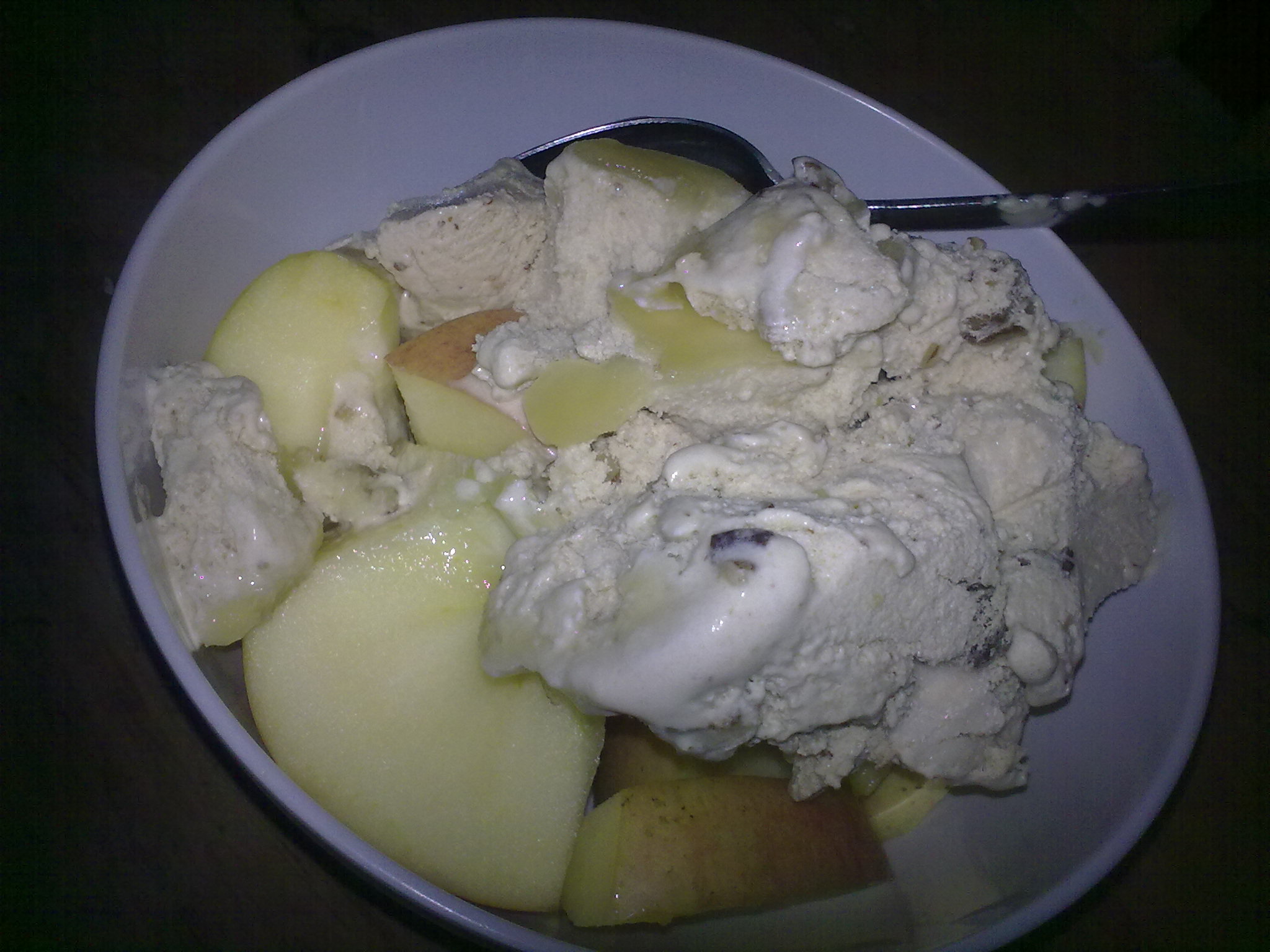
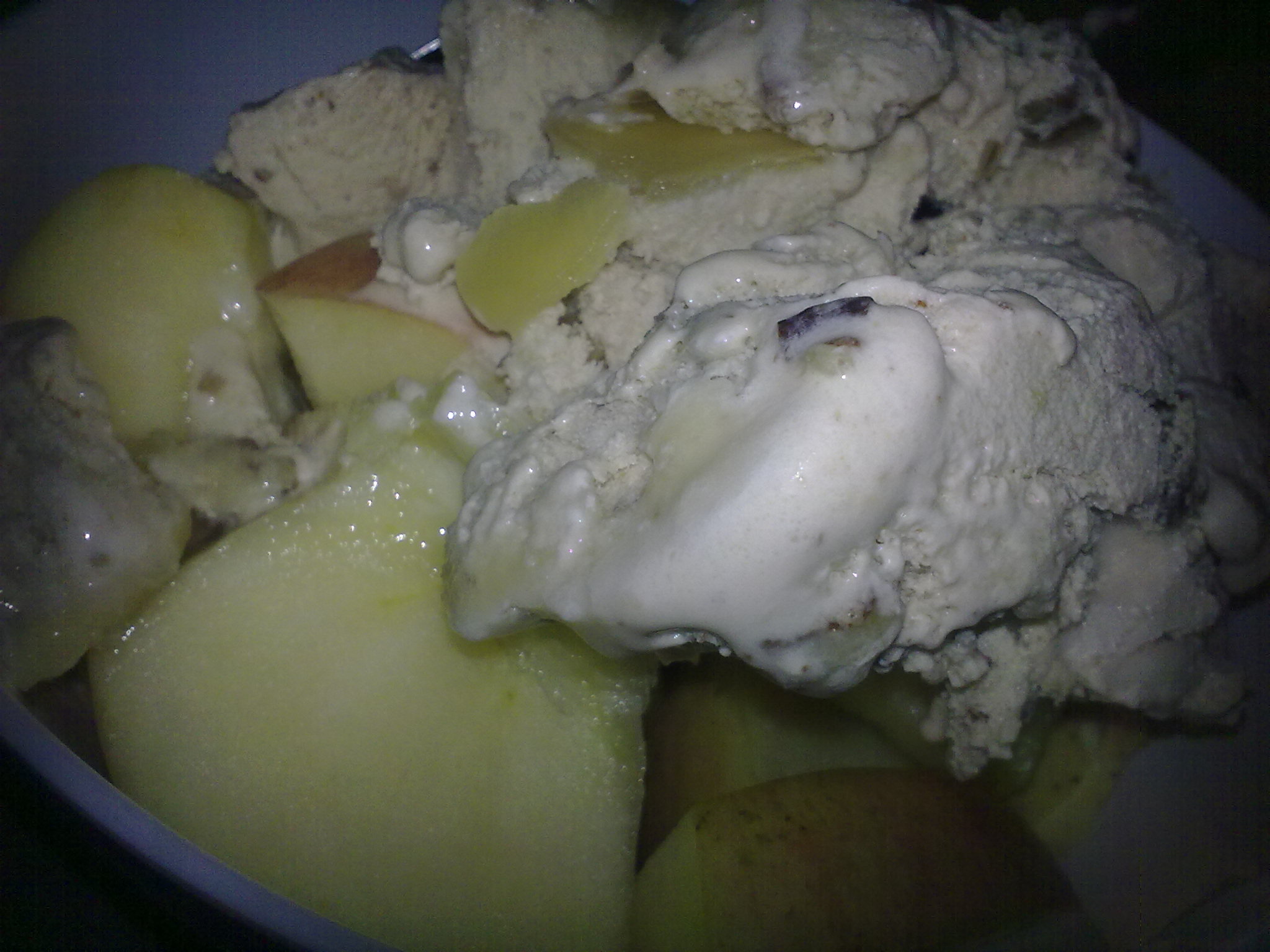
I don’t eat enough fruits (or even veggies). So on Sunday I bought some. That night I really just wanted to chop up an apple but I discovered my leftover butter pecan ice cream from my dental nightmare day.

And so:

Healthy eating fail. But it was yummeh!

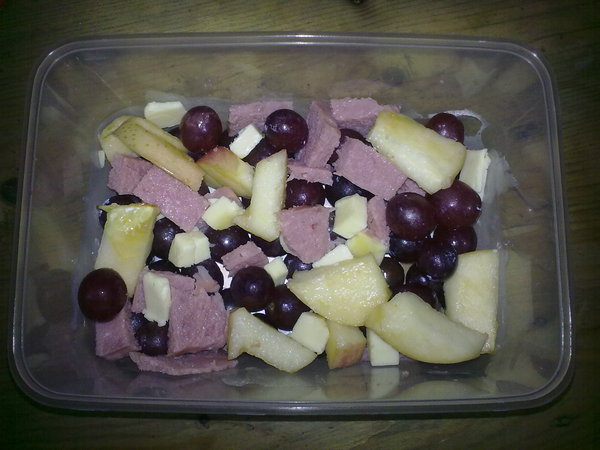
This was my dinner last night. (And also tonight, minus the apples because I was too lazy to chop.)

Grapes, apples, cheese, Spam. I love the colors. :)

I need to lose weight, demmet.

‘variations’ now live on elimae

My poem, “Variations on the Expulsion from Eden”, is now up on the elimae website (August issue). Click here, if you are so inclined.

sf with heart: apex magazine # 14 review

Pinoy Pop continues its survey of online speculative fiction magazines this week with a look at the latest issue of Apex Magazine. Apex Magazine started out in 2005 as the Apex Science Fiction and Horror Digest, published by Apex Publications. Two years and twelve digests later, Apex Publications became a full-fledged independent publishing house with the creation of the Apex Book Company. The digest then became a digital magazine in constant search for dark speculative fiction and poetry.

Issues, released every first Monday of the month, are available online and as free PDF downloads. Readers are also encouraged to buy a digital copy, or make a donation of any amount as a show of support to the authors and editors.

Issue 14 marks managing editor and owner Jason Sizemore’s “last go around as fiction editor for a while”. Next month’s issue will be helmed by award-winning author Catherynne M. Valente.

No endings or major plot twists are given away in this review, but for the purists, spoiler warning commences here.

Read more.