hamlet 2

hamlet2pic5

Photo from Baltimore Magazine

Didn’t everyone die in the first one? Catherine Keener asks Steve Coogan’s Dana, but who cares? The school’s going to shut down the drama club (apparently the last remaining elective in this Tucson high school), art education in the US is being threatened, and he needs to please this kid critic who has just slammed his theatrical adaptation of Erin Brockovich. What else can be done?

Write a damn sequel for Shakespeare’s Hamlet! With a time machine! And Einstein! And Jesus! And a song called “Rock Me, Sexy Jesus”! And additional music from the Tucson Gay Men’s Chorus!

You have quite the swimmer’s bod, one of Dana’s students says of Dana’s Jesus. Wait a second, the student says, confused, Is Jesus a swimmer in this play?

The kid critic quotes Roland Barthes in one of his articles. That really got me.

demons and a dark city

Angels & Demons

2009_angels_and_demons_006

I borrowed and read Dan Brown’s The Da Vinci Code and Angels & Demons back when the first film’s still generating some negative buzz in the Catholic community. I just wanted to find out what the books have to offer.

Well, I found out soon enough that they offer lots of fun trivia, shallow characters, and unimpressive storytelling. Too harsh? To paraphrase one of my creative writing professors: Dan Brown’s loaded, he doesn’t give a shit about what you think.

True.

Paul Bettany saved the first film for me. I might even consider watching it again, for him, provided that I’ll be allowed to fast-forward. Angels & Demons is better because there’s less talk, and Ewan McGregor’s in it. No, seriously: the film’s pretty much straightforward. That insufferable Langdon throws in some nuggets of wisdom, but it’s all about the action. A string of themed murders, characters beating the clock, characters talking while trying to beat the clock – the stuff enjoyable, formulaic suspense films are made of.

I can hardly recall the book now, but that one scene in the film, that scene where Langdon is trapped under the church and is banging on the iron manhole cover to attract the policemen’s attention? I remember that as a particularly excruciating flashback passage in the book. This is the problem with characters that are not thoroughly fleshed out: I don’t care about Langdon, Mr. Writer, I don’t care about his phobia of being buried alive (or being in a small space, I can’t be sure) (see?), I don’t care about his childhood trauma, I don’t care about the history of his Mickey Mouse watch. Let’s not kid each other. This is plot-driven, baby. So move the damn plot forward and enough with these attempts at giving character backgrounds.

The film moves the plot forward and it works. It gets silly at times, but you’ll forgive the filmmakers. Just remember: Ewan McGregor gets a lot of screen time. And he’s wearing black.

ewan2

So you’ll forgive Vittoria for talking even though she knows they have less than five minutes to deactivate the bomb.

It’s not a spoiler. Suspense films are fraught with bombs. You should know this by now.

Photos from Celebrity Wonder and Allmoviephoto.com

Dark City
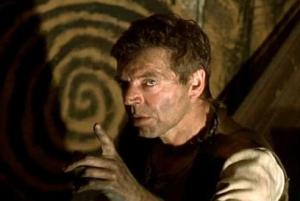
image007

In the beginning of the film, there’s a light swaying from the ceiling. There’s a man sitting in a bathtub filled with water. There’s blood on his forehead. He gets up, gets dressed. Someone calls him on the phone, says he’s a doctor, says he shouldn’t panic. The man gets out of the hotel room and finds out that everyone is asleep. The guy behind the desk, the guy in the phone booth, several men sitting around a table. Maybe the whole city, even. Save for the half-naked girl in his room, who is clearly dead. On her skin, someone has drawn spirals using blood.

Dark City’s premise is horrifying, and fascinating, and I highly recommend that you watch it. Also, it is an original story; it is not based on a comic book (as I would have assumed) or a novel. We hardly see original productions anymore.

Oh, and William Hurt’s in it, because William Hurt makes everything better. :D
3085356453_a8729eaca3

Special thanks to the lovely Liz for the reco.

Photos from sscnet.ucla.edu and flickr.com
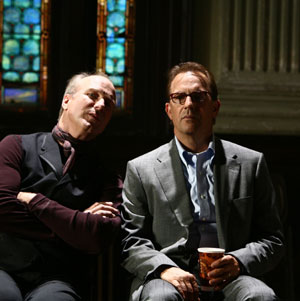
mr. brooks

brooks

Photo from smh.com.au

Oh, I love the way you think, William Hurt’s Marshall says at one point in this film. And I think it’s wonderfully twisted.

And that’s all I can say about Mr. Brooks really – wonderfully twisted. Kevin Costner is Mr. Brooks, and his interactions with the suave, gum-chewing, sometimes tender, sometimes bullying Marshall are the strongest scenes in this film. William Hurt is perfect, as always. (Have you seen A History of Violence? You should.) Dane Cook pulls it off as Mr. Smith, who discovers Mr. Brooks’s “addiction”. Demi Moore also stars here as a police detective in the midst of a divorce, but I’ve never been fond of Demi Moore.

But, seriously: the Kevin Costner – William Hurt tandem? Genius. Somebody cast these two in a dramatic film, and quick. Oscar wins, for sure.

The song played during the final scenes was also terrific:

(Mr. Brooks was released in June 2007, but it wasn’t shown here, so I just streamed it here.)

spiral

spiral2

Photo from deadlantern.com

Mason is an asthmatic loner living in an apartment in glum Portland. He works as a telemarketer at an auto insurance company; at lunch he eats alone, consuming a sandwich, an apple, a carton of milk. He paints, he listens to jazz. He really likes jazz. Berkeley, his unusually protective boss, seems to be his only friend.

This film was screened in 2007 at the Santa Barbara film fest, and won the Gold Vision Award. I found the film well-photographed, well-acted, with some affecting scenes. Conclusion’s not that original, but it’s serviceable.

However: It’s frustrating because in some key scenes, instead of sticking to the musical score, the filmmakers opted to use pop/alternative rock songs. Aren’t we all for atmosphere? You give me a rainy Portland and then shift to an episode of Grey’s Anatomy.

It’s frustrating because it could have given a deeper insight into a telemarketer’s life, and into Mason’s life. Berkeley (played by Chuck‘s Zachary Levi) is a truly intriguing character, and I would’ve wanted to learn more about him.

Sure Spiral won that award, but it could’ve been more.

You can stream it here.

james, james

I had the luxury of having a friend with movie passes, so we watched both on the same day. Both origin stories, of which I have little to no prior knowledge, and both with main characters named James.

(If you want to gauge my “prior knowledge”, let me tell you something: I thought Logan’s first name was really “Logan”, and I thought Captain Kirk’s name was really, well, “Kirk”. I recognize the terms “Vulcan”, and “Klingon”, and I know “Spock” is a name for someone, but I don’t know who. I’m sure there’s someone named “Data” in the Star Trek universe, but maybe he comes later in the game.)

So.

X-Men Origins: Wolverine

x-men_origins_post

Photo from shockya.com

All that hype (and indignation over the leaked copy) for this. If you’re going to give me cardboard characters and a derivative plot, might as well give me decent CGI and compelling fight scenes. I can’t remember how many times Wolverine shouts “Victor!” and assumes that pose. Too many times, I guess. I did enjoy the first few scenes—nice credits sequence, nice-looking clean-cut Asian guy with the crazy gun skillz, Reynolds in the elevator with a line that made me laugh, Pippin (or was it Merry) and his light bulb. Then Logan moves to Canada, becomes a lumberjack, and gets a girl who asks why the moon is lonely, apparently to make an important plot point. How pitiful, how sad, barf.

I watched it for Liev and Ryan Reynolds and the Gambit character. The first two didn’t get enough screen time, and Gambit was disappointing.

Moving on.

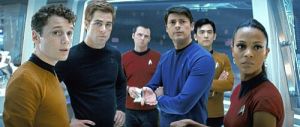
Star Trek

startrekmovie_500

Photo from Post-Gazette

Nerd bullies, gadgets, overwrought militaryspeak, bright-colored uniforms – now that’s more like it. Before we went into the cinema, my friend with the movie passes said, “Bet this is going to suck”, and even planned to just walk out and shop if the first scene bored her. It didn’t suck, we finished the film, and we left the mall happy. It’s a fun ride, and I wouldn’t mind watching this film again.

I don’t know why, but for the most part of the film, the fact that Harold and Kumar’s Harold is playing the young Mr. Sulu completely escaped me. The entire time I just kept wondering who his character was. I didn’t even realize until today that that was Eric Bana, and that woman was Winona Ryder. Toink.

hitch and farley

I’ve recently finished two Hitchcock films starring Farley Granger, thanks to YouTube and a couple of kind souls.

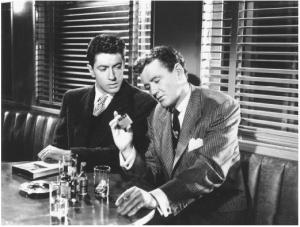
I won’t bother praising Strangers on a Train – I’ve seen Psycho and Birds and Vertigo; this by far is my favorite. Robert Walker was amazing; I thoroughly enjoyed that first scene on the train (I beg your pardon, but aren’t you Guy Haines? – very strong homoerotic undercurrents in this scene) and that scene with his character’s mother. It’s father, isn’t it? (Laughter) It’s him.

strangers1

(Photo from Film Reference.com)

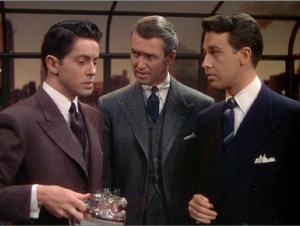
Speaking of homoerotic undercurrents, Hitchcock had an interesting problem with Rope. The play it was based on (written by Patrick Hamilton) was explicit in stating that the two lead characters – Phillip and Brandon – and their schoolteacher, Rupert, are homosexuals. In order to get past the censors, “Hitchcock faced the constraint of presenting the three major protagonists as homosexual without ever stating such explicitly (Bouzereau 2001).”

rope-pic-2

(Photo from thisdistractedglobe)

Seriously, though, five minutes into the film I already had a hard time understanding how it did manage to get past the censors. (Later on the viewer will realize that there is only one bedroom in the apartment where Phillip and Brandon are staying, e.g. when Janet asks where the telephone is, Brandon says “It’s in the bedroom” — indicating there is only one bedroom — and she responds “How cozy!”) But hey, hooray.

Other details:

As Hitchcock was filming for the first time in Technicolor, the film crew had to wield gigantic cameras which both set and actors had to accommodate. This was further exacerbated by the fact that Rope was to be performed in real time and, in order to maintain the suspense, Hitchcock insisted the film be shot in long takes that would often near the maximum possible (10 min) length for colour film cartridges at that time. This meant that – in order to accommodate the cameras – the entire set had to be mobile with walls, chairs and tables being continually moved during filming. A task made even harder by the fact that this was performed so quietly a direct sound-track could be filmed (Truffaut 1983).

This is what I find fascinating – despite this display of ingenuity, Hitchcock would later tell French director Truffaut that the film was “a stunt… I really don’t know how I came to indulge in it.”

I disagree. It is genius.

Except for the fact that James Stewart was miscast (Cary Grant, the first choice, who turned down the role because he didn’t want to be perceived as gay – I know, pfft – would have been better; but who cares what I think, I’m saying this 60 years after the fact), and I was bored by Rupert’s speech in the end.

In any case, genius. And John Dall was perfect.

As for Farley. Well, Farley. He’s quite a character. I like the guy.

LOS ANGELES – In Farley Granger’s newly published memoir “Include Me Out,” the former screen idol makes a revelation that is unusual among Hollywood tell-all books: He was bisexual.

Granger describes a Honolulu night that epitomized his life. A 21-year-old virgin and wartime Navy recruit, he was determined to change his status. He did so with a young and lovely prostitute. He was about to leave the premises when he encountered a handsome Navy officer. Granger was soon in bed again.

“I lost my virginity twice in one night,” he writes.

It appears that he also dated Arthur Laurents, who, if I’m not mistaken, wrote the film adaptation of Rope.

Old (gay) Hollywood. I love it so.