an abduction by mermaids

As a finalist at this year’s Philippines Free Press Literary Awards, this story has a chance to win. Not sure if it will, but being shortlisted is already an honor.

I wonder how that will go at the awarding. Will all the finalists be made to stand onstage and hold hands? Will we be given a chance to cry? Can we put our hands over our mouths and shriek when another person’s name is called? Can we hug each other but secretly think ‘You bitch, that crown should have been mine’?Tell me, is there going to be a suspenseful drumroll? GASP.

Oh, you’re still here. How kind of you.

Anyway, here’s “An Abduction by Mermaids”. Special thanks to Katt, who read it first.

Hope you enjoy it.

P.S. My poem, “Storytellers” is now up on elimae. Click on the link to read.

Okay, back to the story. :D

Continue reading an abduction by mermaids

noli me tangere and zombies

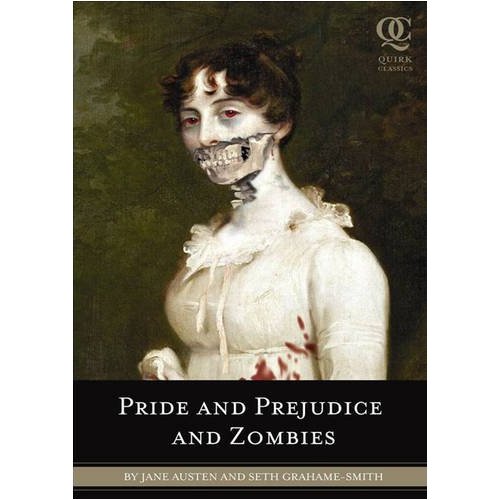
510xxfxxxgl_ss500_

Oh, I’m sure you’ve heard of Seth Grahame-Smith and Jane Austen’s Pride and Prejudice and Zombies.

But have you heard of Carlos Malvar and Jose Rizal’s ‘Wag ‘Mong Salingin Ang Mga Patay (in progress)?

Noli Me Tangere and Zombies, bring it! (I don’t have a picture to accompany this because I suck at Photoshop.)

Click on the link to read/download the first chapter. It begins:

Nang gabing ang mundo’y magwakas ng tuluyan, abalang-abala ang mga tauhan ni Kapitan Santiago sa paghahanda ng piging. Ang piging ay isang pagsa-salo-salo na inaalay para sa isang panauhing pangdangal, isang santo, isang okasyon ng pagdiriwang, o kahit anong chorva lang. Ang chorva ay isang salitang hindi pa naiimbento ng mga panahon na yun sapagkat masaya na ang mga tao sa pag-gamit ng salitang “kwan” at “ano” upang ipabatid sa kanilang mga kausap ang mga bagay-bagay at konseptong hindi mabigyang hugis ng kawikaan. Masaya na sila sapagkat yun ang sabi sa kanila ng mga establisyamentong nangangalaga sa paggamit ng mga kawikaan.
“Bonggang-bongga ang piging ngayong gabi, Manang Flora!” sabi ng dalagitang si Ningning na nagtatadtad ng mga patatas. Si Ningning ay mahilig mag-imbento ng mga salita tulad ng “bonggang-bongga” at “dilemma” sapagkat hindi siya nakapag-aral sa unibersidad.
Kinurot ni Manang Flora ang tagiliran ng dalagita. “Huy, Ningning! Ano ba yaong pinagsasabi mong mga salita? Bilisan mo sa paghihiwa ng mga patatas at nang maluto na sa kumukulong mantika. Ilang minuto na lamang at magdaratingan na ang mga bisita.”
“Kung Ano Man, Manang!” sambit ni Ningning sabay senyas ng letrang ‘Ka’ gamit ang kanyang mga daliri. “Alas-sais y medya pa lamang! Hindi ba’t ang imbitasyon ay para sa ika-pito pa ng gabi? Sa palagay mo ba’y darating ang mga inimbitahang panauhin sa tamang oras?”
“Kungsabagay,” sabi ni Manang Flora. “Asa pa tayong sisipot ang mga yun. Malamang ay magpapamalas pa sila kung sino ang pinakaimportante sa lahat sa pamamagitan ng pagpapahuli upang paghintayin ang iba.”
Naghagalpakan ang dalawa sa katatawa.
“O, Da Ka!” hirit ni Ningning. Madalas siyang mapabunghalit ng “O, Da Ka!” simula nung nahabaan siya sa kasasambit ng “O, Diyos Ko!”
Hindi nagkakamali ang dalawa sa pagaakalang magpapamalas ng kani-kanilang importansya ang mga naimbitahang panauhin. Pagsapit ng alas-siete, kung kalian ang mga bisita’y dapat nagsisipagdatingan na, mag-isa pa ring nagpapaypay ng kanyang abanico sa sala si Tiya Isabel na kapatid ni Kapitan TIyago.

First heard from Crystal Koo’s tweet. Posted by J. Rizzle. Says he: “Ang hindi marunong lumingon sa sariling wika ay soshal. (And malansang isda too)” and “Are we human, or are we Sex Bomb Dancers?”.

one for elimae

In the (e)mail:

Hello, Eliza. Let’s do “Storytellers” for the August issue, which should appear about the 15th of the month. Welcome aboard.

Yay! :D

I absolutely adore this literary journal, and I’m glad I’m going to be a part of it.

* * *

I’ll link once the poem’s up. For the meantime, read “December 1980” by Nicelle Davis. She also has another poem (plus a recording) in The Pedestal Magazine. Listen to her read “The Missing Text of the Gospel of Judas“.

What? When I discover a new poet, I Google him/her. What’s weird about that?

Oh, shut it.

noted

Just a few minutes ago I’ve been informed by Charles Tan (who manages to read and review several magazines/novels/websites, hold a day job, write fiction on the side, and, possibly, eat, because he has ten clones and/or can bilocate – I’m still not quite sure) that Locus Magazine has praised/mentioned a number of stories off Philippine Speculative Fiction IV – including my story, “Parallel”.

*weird dancing commences*

View the table of contents of Locus’s July issue here. It lets us know that the review is on Page 27, but unfortunately the content’s not available online.

A great honor. Now to find a way to get a copy of the magazine.

Oh, and since you’re here, buy a copy of PSF IV. Yes? Yes???

All right, then. :)

got it

Photo20097131338687

I’m tickled that Expanded Horizons gave me a handwritten check. Hee.

I know it sounds like payment for some legally unsavory services (which might be why the people at the bank kept looking at me funny; they were taking so long with the check that I actually started feeling like a criminal), but really, “Night Out” is a story. Which you can read here, if you feel like it.

EH is also currently accepting submissions for its Fairy Tale issue.

They want stories that

reinterpret well-known (or less well-known) fairy tales and fantasy stories, or tropes. A starting point would be stories told from another character’s viewpoint, for example. (Women, fae, or even otherkin…)

Stories which flesh out the women characters in fairy tales is another possible angle. Stories which thoughtfully reinterpret or relocate “European” fairy tales in non-European contexts are also interesting to us (especially since many of these stories have non-European origins, for example, Cinderella). What happens to fairy tales when cultures collide is another idea.

If you have something – a story, an idea – then by all means work on it and send it in!

* * *

So I’ve started watching BBT‘s Season 2. Some random thoughts:

1. I want Sheldon Cooper’s T-shirt folder.

2. I think Leonard looks like a gay beautician.

* * *

Penny: Has Leonard ever dated a girl who’s not, you know, smart?

Sheldon: Well, once he dated a woman who has a Ph. D. in French Literature.

Penny: How does that not count as “smart”?

Sheldon: Well, for starters, she’s French. And it’s literature.

* * *

The rack where I hang my clothes finally collapsed beneath the weight of my various tops and pants, and so I came home and found my clothes on the floor. Being an enterprising homeowner, I Mighty-Bonded the rack to the door.

Evidently I had applied too much Mighty Bond. I now own a blouse glued to its hanger.

True story.

reading poems

I love this: No matter how you would describe the voice that a poem carries, what the poem wants is a readership through time attuned to its voice—not a prize, if they are not the same and they are not.

This from Marc Gaba‘s review of the English poetry sections of UP’s Likhaan Book of Fiction and Poetry series. I own two volumes: 1998, poetry edited by J. Neil Garcia; and the 2001 volume, poetry edited by Gemino Abad.

Sadly, I’ll have to agree with Mr. Gaba here:

To many poets whose works appear frequently in the series, poetry seems be a matter of sounding ‘poetic’: inflated, sort-of-heightened language that sounds understandable, but if read closely (or if simply read) either makes no sense, or obscures the small idea that is meant. Often, in effect, sentences descriptive in gesture do not describe anything, images are not achieved, verbs don’t do their jobs, diction is just wrong…—it is as though language in poetry is meant to be a kind of noise that ‘sounds beautiful.’ Metaphors proliferate with no consciousness tracking them, mainly because they derive from unintentional errors in diction. The writers of these poems seem unaware of how their language mangles material in the name of a misguided sense of what is poetic.

He gives several examples, and closes with:

…the intention—the wish—is that the poems we write be read not as extensions of people with names big or small, nor as cultural ornaments that one need not consider seriously, but as a written thing that is best read without—in fact may be read only without—fear, without that weird readiness to be intimidated, a readiness which tends to submit too easily to inherited, ‘expert’ judgement and interpretation at the expense of a self vivified by its honest response.

Amen. :)

* * *

I adore that phrase – inherited judgment. Which makes me think of the word canon. Which makes me think of those instances in CW classes when you want to raise a contrary criticism about a piece, but you can’t because GUSH THEY’RE PILLARS OF POETRY AND FICTION GUSH.

* * *

There’s a certain “pillar of poetry” whose poems I just don’t enjoy. I try to, but I can’t. I once shared this with a friend who finished CW (I majored in Journ and just took electives), waiting for the backlash. It didn’t come. She looked at me and said: “Yeah, I don’t like him/her either.” Then we laughed. It was a nervous, exhilarated laughter, as though we had just shoplifted and had gotten away scot-free.

* * *

Just a thought, though: I think Mr. Gaba should have mentioned that a poem of his was included in the 1998 Likhaan.

* * *

I got the link to his review from Conchitina Cruz’s blog. Cruz’s first poetry collection, Dark Hours, was a defining moment for me as an avid reader and occasional writer of poetry. Here are poems that mean something to me, I thought. Here are poems that move me. Her second book, elsewhere held and lingered, is also excellent.

* * *

Marc Gaba was my instructor in my first and only poetry class, Imagery. I thought he was great, his class another defining moment. As for his poems, I’ve read only a handful, but this is my favorite:

Study of Linearity

He tasted his tear, tiny orchestra, it fled
itself down his face to the tongue which could not
hold that rapid taste, the lives that quote each other
streamed below his placard, all day and later
the sun pulled out like an ending, it pointed
away from its answers, at us whom it missed,
word by word, the holes in the net we make.
basketball, the beach

You may have missed them. I mean, I make it a point to read the papers every day, and I only saw Part 3 today.

The Philippine Daily Inquirer has been running reports on game fixing for a while now (I suppose in preparation for the UAAP opening ceremonies). I was not surprised by the idea, but I was shocked by the stakes involved:

As much as P300 million changed hands in recent years in each season of the Universities Athletic Association of the Philippines (UAAP) and the National Collegiate Athletic Association (NCAA), officials say.

I’d rather accept that the UP Fighting Maroons just suck than to hear that its players are dropping games for money.

God, all this cash – for an amateur competition.

Anyway, the series is a good read. Keep your eye out for Part 4.

Part 1 – Stakes reach P300 M in varsity hoops

Part 2 – Player caught in trap allowed to go scot-free

Part 3 – Bookies using text messages make betting easy

* * *

200px-The_Beach_film

When The Beach came out I was in high school. I saw it, I loved it. Tilda Swinton is just a fantastic actress, and Leonardo DiCaprio is effective. I saw it again last night and I still loved it, though it might have been better without Richard’s final VO. I learned that Paradise is not a place but a feeling that you have in a moment yadda yadda it lasts forever. Ugh, no.

A lot of people didn’t like it that much, based on the film reviews I’ve read. Hm. I wonder if the book’s better.