i am amused

by this lecture given by the ever-brilliant Conchitina Cruz. She says, My enchantment with genre bending has to do with the possibilities it yields through an unyielding stance toward the question: What is it?

From “To Essay a Poem: Notes on Genre Bending” :

Our creative writing program here in UP, like many others, is organized by genre and divided into three basic tracks: poetry, fiction, and creative nonfiction. On occasions that call for quick descriptions of these strains, it is convenient to go tongue-in-cheek: poets pay attention to sound and image, fiction writers to plot, and nonfiction writers to “what really happened.” Or: poets play with line cuts and language, fiction writers with narrative and time, and nonfiction writers talk about themselves. Easy to tell which genre demands, as far as reputation goes, the most amount of chika and the least amount of skill. Which also explains the order of elimination CW majors typically go through (“Well, it looks like I can’t do fiction, and I know I can’t do poetry, so I guess that leaves…).

There is nothing more tiring than hearing yourself say the same things in the same ways again and again, nothing more exasperating than hearing others say what you are also saying in the same ways again and again, homogeneity being another cause of claustrophobia. If writing is a means of ushering thought into ordered existence, and what you say is how you say it, then the cross-pollinations of the genres can only guard against monotone and redundancy in making possible varieties of articulation and therefore varieties of thought, diverse shapes of imagination.

Read the whole thing; it’s an absolute treat. :D

* * *

Ms Cruz also provides a link to Cesar Ruiz Aquino’s “The Distance to Parnassus: A Palanca Commentary”. In this article, Aquino critiques “three poetry collections-The Gospel According to the Blind Man by Marie La Viña, Sl(e)ights by Ana Maria Katigbak, and Morphic Variations by Francis C. Macansantos-which won in the Poetry in English category of the 2008 Don Carlos Palanca Memorial Awards for Literature. This critical commentary highlights the strengths and weaknesses of each collection in terms of imagery, use of language, manipulation of form and structure, theme, and prosody.”

Interesting! The last time I checked the Palanca website, I was only able to read Marie La Viña’s Gospel, which bagged the 3rd place for Poetry last year (I adore this poem).

I’ll go download and read what Mr. Aquino has to say.

dave barry made me cry

Yes, that Dave Barry.

There should have been ample warning as to how heartrending “Hallowed Ground” really is. I mean, it came bundled up in a book called Boogers Are My Beat for god’s sake!

But bravo, Mr. Barry. Bravo. Beautiful, this.

He wrote this essay a year after 9/11.

You’ve been warned.

Read, read, read.

Hallowed Ground

* * *

One of the most heartrending quotes in “Among the Heroes” is from Deena Burnett, the widow of Flight 93 passenger Tom Burnett, who is believed to have played an active role in the battle on the plane. Mrs. Burnett is describing what it’s like to be the widow of a hero:

“In the beginning, everyone asked, ‘Aren’t you proud of him? Aren’t you happy that he’s a hero?’ I thought, my goodness, the first thing you have to understand is, I’m just trying to put one foot in front of the other. For my husband to be anyone’s hero … I’d much prefer him to be here with me.”

So we need to remember this: The heroes of Flight 93 were people on a plane. Their glory is being paid for, day after day, by grief. Tom Burnett does not belong to the nation. He is, first and foremost, Deena Burnett’s husband, and the father of their three daughters. Any effort we make to claim him as ours is an affront to those who loved him, those he loved.

He is not ours.

Yes.

* * *

In other news, have you read former Senator Franklin Drilon’s commentary about Cory’s exit from the Presidency?

This is amazing (emphasis mine):

For the third track, the transition team prepared a series of books on the Aquino administration. These included the President’s Report, along with individual reports as well as videos on key areas like policy, decentralization, antipoverty and other aspects of governance.

These were distributed to schools, libraries, embassies and media agencies. Leafing through them again, I realize that much of what Cory did as President went unheralded, given how allergic she was to the idea of doing things for show or for PR purposes.

There are photos of her with children, with the sick, and with victims of disasters, which never made it to the front pages of newspapers.

For today’s approval rating-hungry incumbent, this would have been unthinkable.

august’s end

What shone through all the clouds of ideology was my parents’ simple belief that children are an end, not a means. My parents did not have children to add more footsoldiers to the cause.

My liberalism would come to be a different creature, one admixed with the history that I now study, spiced with the knowledge that the world is a fallen place, not suitable for utopian schemes. That’s an easy thing to see when you’ve met some utopians.

* * *

imageDBThe passages are from Mark Oppenheimer’s excellent, excellent essay, At August’s End, wherein he talks of his days spent as a boy in leftist summer camps. I admire this essay for its honesty.
I initially approached Sleepaway: Writings About Summer Camp warily – I’ve never been to summer camp, and I thought it was a boring subject for an anthology. But with contributors like Margaret Atwood, Sharon Olds, David Sedaris, and here, Oppenheimer, it appears that the book is going to be an interesting read.

Special thanks to Andrea for letting me borrow the book. Hope you’re feeling better now. :)

* * *

In other news, with Big Bang Theory and Fringe out of the way (I can’t wait for September), I am now watching – get this – a Japanese cartoon series. The introductory episode of The Melancholy of Haruhi Suzumiya is absolutely insane. (“What’s with this pan-up?” “And so, to change scenes, we’ll just have a shot of the sky.”) One of the characters is a waitress from the future (don’t ask), who tries to do some Sailor Moon-like hand-and-feet choreography, but often fails because she cannot balance on one foot.

This is not what the series is about, but more po-mo anime please!

noli me tangere and zombies

510xxfxxxgl_ss500_

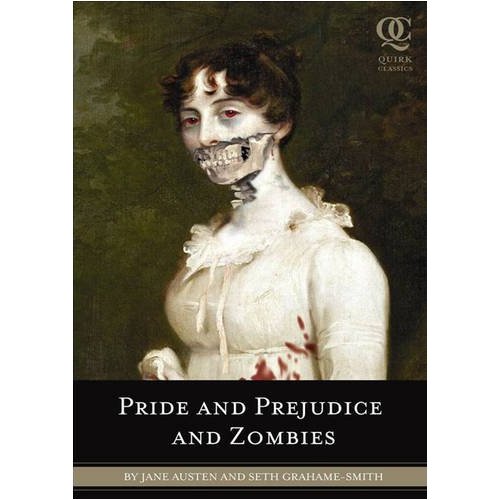
Oh, I’m sure you’ve heard of Seth Grahame-Smith and Jane Austen’s Pride and Prejudice and Zombies.

But have you heard of Carlos Malvar and Jose Rizal’s ‘Wag ‘Mong Salingin Ang Mga Patay (in progress)?

Noli Me Tangere and Zombies, bring it! (I don’t have a picture to accompany this because I suck at Photoshop.)

Click on the link to read/download the first chapter. It begins:

Nang gabing ang mundo’y magwakas ng tuluyan, abalang-abala ang mga tauhan ni Kapitan Santiago sa paghahanda ng piging. Ang piging ay isang pagsa-salo-salo na inaalay para sa isang panauhing pangdangal, isang santo, isang okasyon ng pagdiriwang, o kahit anong chorva lang. Ang chorva ay isang salitang hindi pa naiimbento ng mga panahon na yun sapagkat masaya na ang mga tao sa pag-gamit ng salitang “kwan” at “ano” upang ipabatid sa kanilang mga kausap ang mga bagay-bagay at konseptong hindi mabigyang hugis ng kawikaan. Masaya na sila sapagkat yun ang sabi sa kanila ng mga establisyamentong nangangalaga sa paggamit ng mga kawikaan.
“Bonggang-bongga ang piging ngayong gabi, Manang Flora!” sabi ng dalagitang si Ningning na nagtatadtad ng mga patatas. Si Ningning ay mahilig mag-imbento ng mga salita tulad ng “bonggang-bongga” at “dilemma” sapagkat hindi siya nakapag-aral sa unibersidad.
Kinurot ni Manang Flora ang tagiliran ng dalagita. “Huy, Ningning! Ano ba yaong pinagsasabi mong mga salita? Bilisan mo sa paghihiwa ng mga patatas at nang maluto na sa kumukulong mantika. Ilang minuto na lamang at magdaratingan na ang mga bisita.”
“Kung Ano Man, Manang!” sambit ni Ningning sabay senyas ng letrang ‘Ka’ gamit ang kanyang mga daliri. “Alas-sais y medya pa lamang! Hindi ba’t ang imbitasyon ay para sa ika-pito pa ng gabi? Sa palagay mo ba’y darating ang mga inimbitahang panauhin sa tamang oras?”
“Kungsabagay,” sabi ni Manang Flora. “Asa pa tayong sisipot ang mga yun. Malamang ay magpapamalas pa sila kung sino ang pinakaimportante sa lahat sa pamamagitan ng pagpapahuli upang paghintayin ang iba.”
Naghagalpakan ang dalawa sa katatawa.
“O, Da Ka!” hirit ni Ningning. Madalas siyang mapabunghalit ng “O, Da Ka!” simula nung nahabaan siya sa kasasambit ng “O, Diyos Ko!”
Hindi nagkakamali ang dalawa sa pagaakalang magpapamalas ng kani-kanilang importansya ang mga naimbitahang panauhin. Pagsapit ng alas-siete, kung kalian ang mga bisita’y dapat nagsisipagdatingan na, mag-isa pa ring nagpapaypay ng kanyang abanico sa sala si Tiya Isabel na kapatid ni Kapitan TIyago.

First heard from Crystal Koo’s tweet. Posted by J. Rizzle. Says he: “Ang hindi marunong lumingon sa sariling wika ay soshal. (And malansang isda too)” and “Are we human, or are we Sex Bomb Dancers?”.

reading poems

I love this: No matter how you would describe the voice that a poem carries, what the poem wants is a readership through time attuned to its voice—not a prize, if they are not the same and they are not.

This from Marc Gaba‘s review of the English poetry sections of UP’s Likhaan Book of Fiction and Poetry series. I own two volumes: 1998, poetry edited by J. Neil Garcia; and the 2001 volume, poetry edited by Gemino Abad.

Sadly, I’ll have to agree with Mr. Gaba here:

To many poets whose works appear frequently in the series, poetry seems be a matter of sounding ‘poetic’: inflated, sort-of-heightened language that sounds understandable, but if read closely (or if simply read) either makes no sense, or obscures the small idea that is meant. Often, in effect, sentences descriptive in gesture do not describe anything, images are not achieved, verbs don’t do their jobs, diction is just wrong…—it is as though language in poetry is meant to be a kind of noise that ‘sounds beautiful.’ Metaphors proliferate with no consciousness tracking them, mainly because they derive from unintentional errors in diction. The writers of these poems seem unaware of how their language mangles material in the name of a misguided sense of what is poetic.

He gives several examples, and closes with:

…the intention—the wish—is that the poems we write be read not as extensions of people with names big or small, nor as cultural ornaments that one need not consider seriously, but as a written thing that is best read without—in fact may be read only without—fear, without that weird readiness to be intimidated, a readiness which tends to submit too easily to inherited, ‘expert’ judgement and interpretation at the expense of a self vivified by its honest response.

Amen. :)

* * *

I adore that phrase – inherited judgment. Which makes me think of the word canon. Which makes me think of those instances in CW classes when you want to raise a contrary criticism about a piece, but you can’t because GUSH THEY’RE PILLARS OF POETRY AND FICTION GUSH.

* * *

There’s a certain “pillar of poetry” whose poems I just don’t enjoy. I try to, but I can’t. I once shared this with a friend who finished CW (I majored in Journ and just took electives), waiting for the backlash. It didn’t come. She looked at me and said: “Yeah, I don’t like him/her either.” Then we laughed. It was a nervous, exhilarated laughter, as though we had just shoplifted and had gotten away scot-free.

* * *

Just a thought, though: I think Mr. Gaba should have mentioned that a poem of his was included in the 1998 Likhaan.

* * *

I got the link to his review from Conchitina Cruz’s blog. Cruz’s first poetry collection, Dark Hours, was a defining moment for me as an avid reader and occasional writer of poetry. Here are poems that mean something to me, I thought. Here are poems that move me. Her second book, elsewhere held and lingered, is also excellent.

* * *

Marc Gaba was my instructor in my first and only poetry class, Imagery. I thought he was great, his class another defining moment. As for his poems, I’ve read only a handful, but this is my favorite:

Study of Linearity

He tasted his tear, tiny orchestra, it fled
itself down his face to the tongue which could not
hold that rapid taste, the lives that quote each other
streamed below his placard, all day and later
the sun pulled out like an ending, it pointed
away from its answers, at us whom it missed,
word by word, the holes in the net we make.

big if

big ifMark Costello’s novel Big If is populated with some of the most interesting, most contemporary, characters. Walter is a moderate Republican atheist working in insurance. He has the habit of crossing out GOD in his dollar bills so that the statement reads IN US WE TRUST. He has two children: Jens, who has grown up as a software programmer, writing code for and pondering the morality (or immorality, or amorality) of the monster game he has developed; Violet has grown up to work in the Secret Service. Vi is assigned to the VP, who is running for president and will have to go to the Democratic primary in New Hampshire to jog (surrounded by security), eat at a McDonald’s (surrounded by media), and shake hands with the common people to get their vote. Jens’s wife, Peta, is a realtor assigned to manage a supposedly boring building now being attacked by a group of violent right-to-lifers. Gretchen, Vi’s superior, has separated from his douchebag boyfriend, but his son has found the boyfriend’s address by Googling himself, and now wants to spend time with his father. Before Lydia married Secret Service agent Lloyd Felker, her talent agent said, You’re not supposed to marry your own agent. And I’m your agent! He’s not that kind of agent, Lydia said, and her talent agent said, Oh my god, is he a literary agent? How will you be able to feed yourself?

Big If, published in 2002, was a finalist for the National Book Award. I wonder what novel it came up against. Costello’s novel was funny and touching and relevant enough to have won.

And the back cover has a blurb from Jonathan Franzen, saying the book is filled with “inside dope”. I mean, come on.

* * *

Next: probably Eden Express. I’m still reading The Blind Assassin, but it’s too rich, I can’t devour it all at once.

I’m also interested in this book:

random

The last good non-fiction book I’ve read was Watching the English by Kate Fox. Pop sociology for the win.

english

* * *

In other news, a story of mine is being considered for a fantasy anthology, but the editors are asking for a major edit. I’ve already edited it, re-sent it. Hope the new version does the trick. We’ll see. ;)

Congrats to Paolo for receiving that acceptance letter. Hooray!

blindness

blindness

..but neither of them thought of asking, Have you got something in your eye, it never occurred to them nor would he have been able to reply, Yes, a milky sea.

(p. 6, Blindness, Saramago)

What if everyone went blind and you were the only one who could see? Jose Saramago’s engrossing prose uses no quotation marks nor paragraph breaks for the dialogues, and it fits this narrative, where the characters’ thoughts and spoken words are interchangeable with the narrator’s. It makes me think of an observer watching people interact at a distance, a watcher-turned-ventriloquist putting words into their mouths, commenting on their actions. At times the narration becomes too wordy, the humor awkward, but the language is beautiful enough to keep even an exasperated reader reading. The last paragraph is a thing of beauty.

* * *

While browsing through the books in Bibliarch the other day, I saw a book called Seeing, also by Saramago. It involves a bunch of voters’ ballots turning up blank. A novel about disillusionment, I believe. Seems interesting. I might pick it up.

seeing

Right now, though, I’m enjoying reading Atwood.

assassin

*Sigh* This lady never fades. :)